
A baby's first solid meal is a milestone, and having a few tools ready makes it much less daunting. This guide lists what you need, how to choose materials, and a few tips to keep everything clean.
When do babies start solids?
The World Health Organization (WHO) recommends exclusive breastfeeding for the first six months, then introducing solid foods. Signs that a baby is ready include sitting with support, holding the head steady and showing interest when others eat. Every baby is different, so check with your paediatrician before you start.
The basic starting-solids checklist
- A suction bowl or plate: keeps food in place on the table.
- Soft silicone spoons: gentle on gums and mouth.
- A bib: silicone ones with a catch pocket are easier to wash than cloth.
- A masher and a strainer: for smooth textures in the first weeks.
- A lidded freezer tray: cook once, serve several meals.
- Food containers: for meals on the go.
- Cooking tools just for baby food: heat-resistant silicone spatulas, a small pan.
Choosing safe materials
Platinum silicone
Soft, heat-resistant, BPA-free, slow to hold odours and easy to clean. Ideal for spoons, bowls, bibs and freezer trays.
304 stainless steel
Durable and rust-resistant, suited to mashers, strainers and pans.
PPSU
Light, hard to break and heat-resistant, often used for bottles and training cups.
Avoid plastics of unknown origin, especially for anything used to cook or warm food.
Cleaning and storage tips
- Wash tools right after the meal, before food dries on.
- Clean and sterilise each item as its manufacturer recommends.
- Let everything dry fully on a rack before putting it away.
- Date your freezer portions so you use them in order.
Our picks
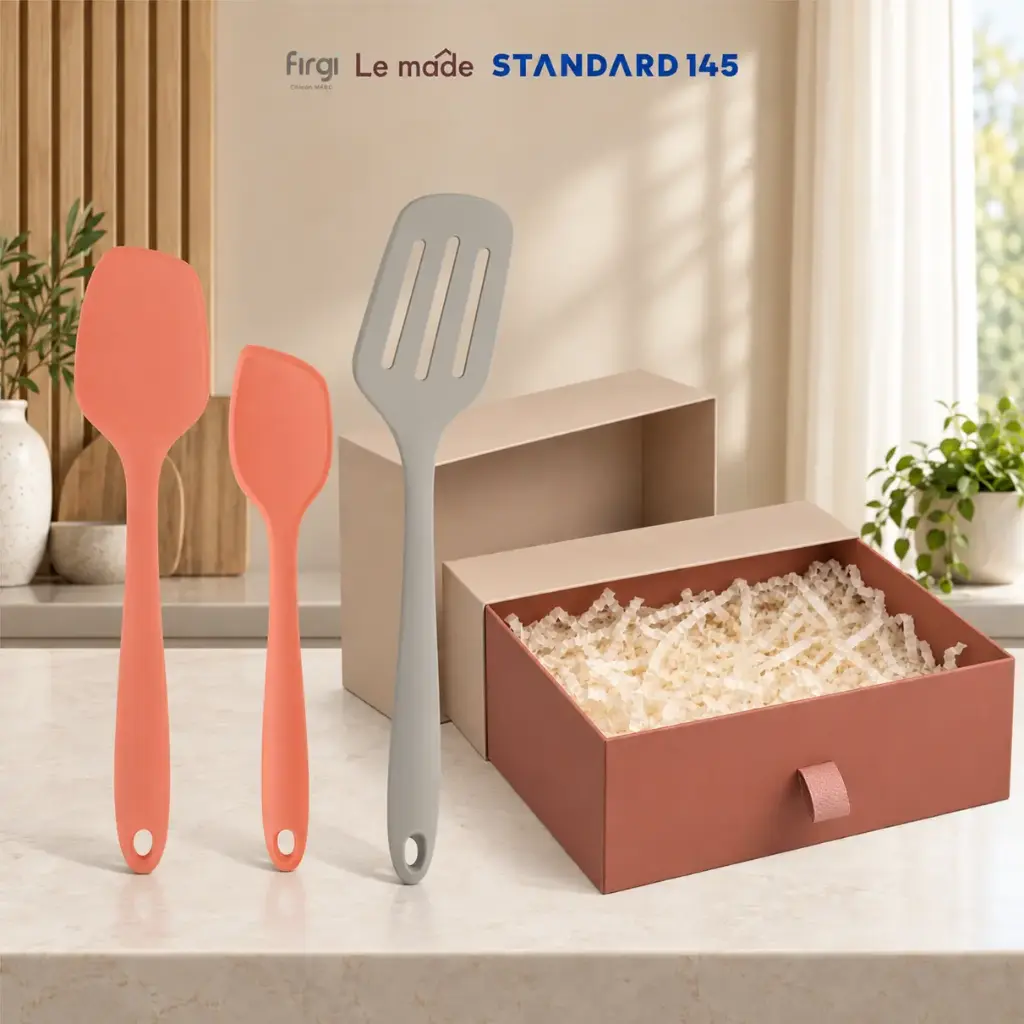
Baby's Little Kitchen Combo holds a one-piece Le Made silicone turner and two heat-resistant Firgi silicone spatulas, kept for cooking baby food. Single items such as bowls, spoons, freezer trays and mashers are in the Life range, and you can browse the gift boxes if you are looking for a present for a family about to start solids.